
Redefining Logistics: How Our Circular Pallets Help Reduce Carbon Footprint
By: The Plastic Flamingo — Christian Aaron Orot
In today’s world, sustainability is no longer optional, it’s essential. As industries continue to grow, so does the environmental impact of manufacturing, logistics, and waste. At The Plastic Flamingo, we believe solutions should not only solve a problem, they should transform it.
The Problem with Traditional Pallets
Conventional pallets, whether made from virgin plastic or wood, come with environmental costs.
Wooden pallets contribute to deforestation, require chemical treatments, and have limited lifespans. Plastic pallets made from virgin materials rely on fossil fuels and generate significant carbon emissions during production.
In a logistics-heavy world, pallets are everywhere, warehouses, shipping containers, ports, distribution hubs. The scale is massive. And so is the carbon footprint.
Turning Waste Into Infrastructure

Our Circular Pallets are made from recycled plastic waste collected from the environment. Instead of allowing plastic to end up in landfills or oceans, we transform it into durable, high-performance pallets built for repeated use.
This shift creates a powerful environmental impact:
Reduces plastic pollution by repurposing collected waste
Minimizes demand for virgin plastic production
Reduces reliance on wood harvesting
Extends material life through circular design
Every pallet represents plastic that has been diverted from nature and reintegrated into the economy.
Lowering the Carbon Footprint
Carbon footprint is the total amount of greenhouse gas emissions caused directly or indirectly by a product or activity. In traditional pallet production, emissions come from:
Raw material extraction
Manufacturing processes
Transportation
Disposal and replacement cycles
By using recycled plastic as our primary raw material, we significantly reduce emissions associated with virgin material extraction and processing.
Additionally, our Circular Pallets are:
Durable and long-lasting, reducing replacement frequency
Designed for reuse, minimizing waste generation
Part of a closed-loop system, where damaged pallets can be reprocessed into new ones
The longer a pallet stays in circulation, the lower its overall lifecycle emissions per use.
Circular Economy in Action
Our approach aligns with the principles of the circular economy, a system designed to eliminate waste and keep materials in continuous use.
Instead of the traditional linear model:
Take → Make → Dispose
We operate in a circular model:
Collect → Recycle → Manufacture → Reuse → Recycle Again
This reduces carbon intensity across the supply chain while creating measurable environmental impact.
Sustainability That Moves With You
For companies seeking to reduce their carbon footprint, sustainable procurement decisions matter. Choosing Circular Pallets is not just about logistics, it’s about climate responsibility.
By integrating recycled, circular solutions into supply chains, businesses can:
Strengthen ESG performance
Reduce Scope 3 emissions
Demonstrate commitment to environmental accountability
Support real-world plastic recovery efforts
Beyond a Product, A Movement
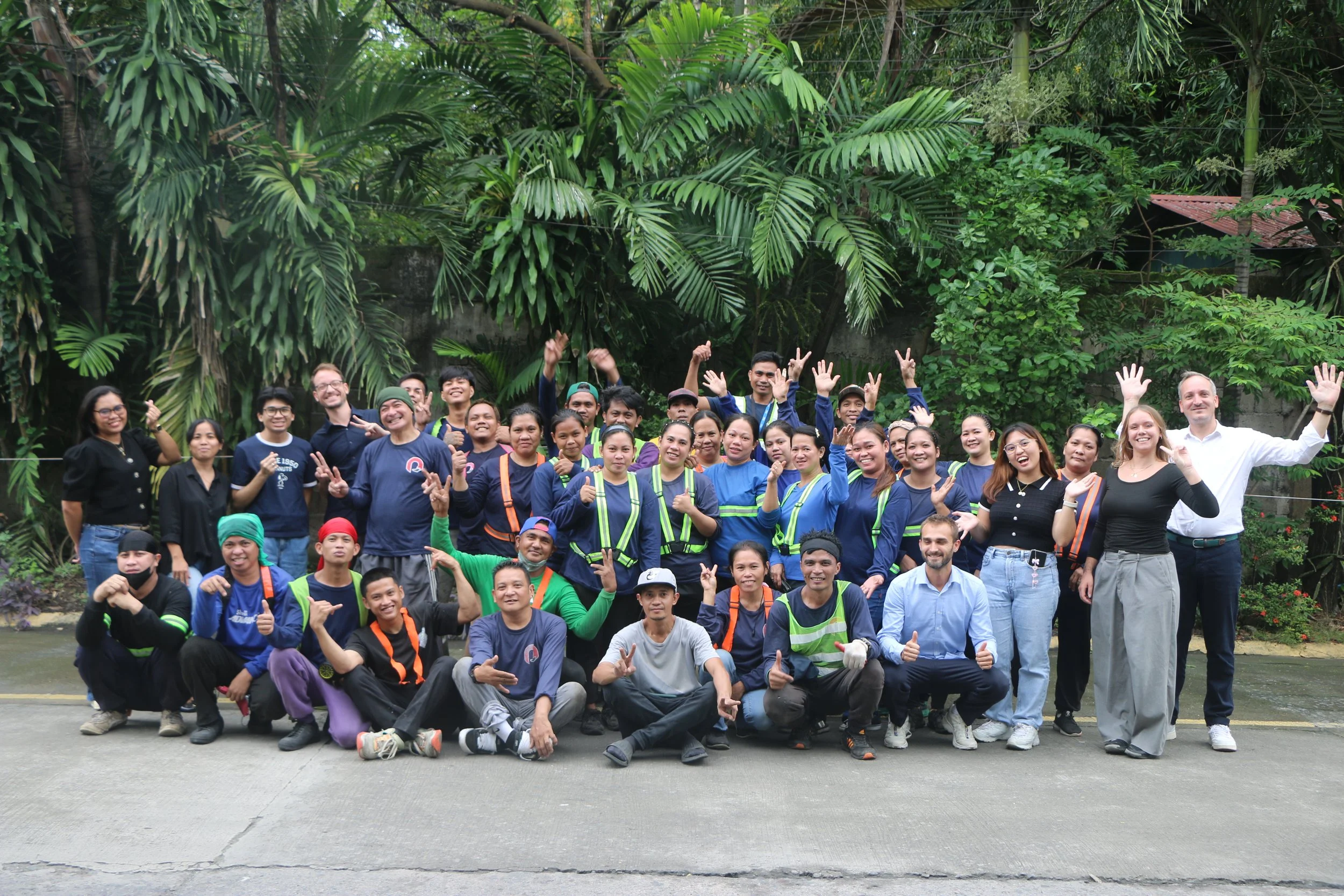
Our Circular Pallets are more than infrastructure tools. They are proof that plastic waste can become value. That climate action can be practical. That sustainability can be embedded in everyday operations.
Every pallet tells a story, of plastic collected, emissions reduced, and a step taken toward a more responsible future.
Because sustainability shouldn’t just be talked about.
It should be built into the foundation of how we move the world.